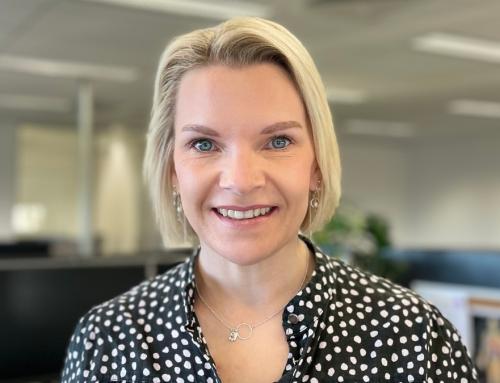
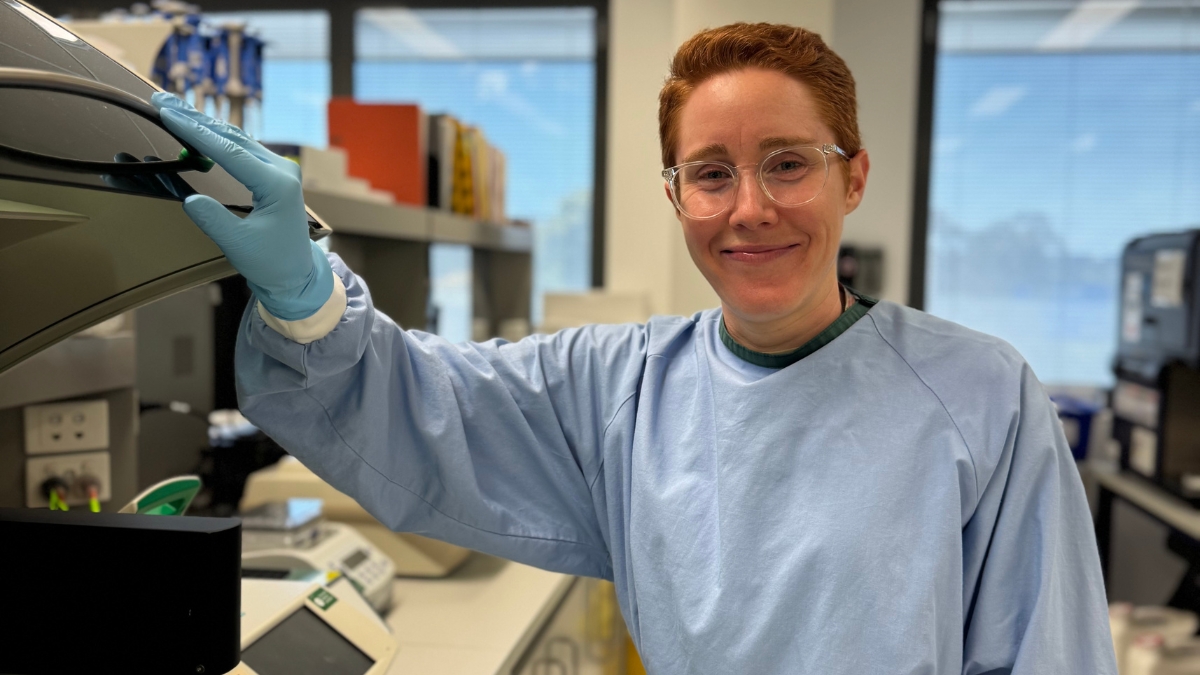
Ashleigh Stewart is a Senior Research Coordinator at Melanoma Institute Australia (MIA), based at Macquarie University. Read on to learn about her fascinating work in the liquid biopsy space, plus why working in the melanoma field is particularly important to her.
Tell us about your latest work.
My primary area of expertise is liquid biopsy, a minimally invasive approach that analyses cancer-related biomarkers (measurable biological characteristics) from body fluids such as blood. Since 2022, I have been working on a liquid biopsy project aimed at developing accurate prognostic and predictive biomarkers for melanoma and non-small cell lung cancer (NSCLC). The project is a collaboration between Melanoma Institute Australia, Macquarie University, Edith Cowan University, and Chris O’Brien Lifehouse, involving a large team of researchers, clinicians, and support staff.
Within this project, my main responsibilities include coordinating sample processing and transfer between sites, and conducting key laboratory experiments. Most of my work has focused on the unresectable (i.e. unable to be surgically removed) Stage III/IV melanoma cohort, using a pre-amplification method (as detailed here) combined with droplet digital PCR (ddPCR) to track driver mutations in cell-free DNA. Our goal is to use these methods to predict immunotherapy response in both melanoma and NSCLC patients through a simple blood test, reducing the need for more invasive procedures.
Put simply, we are developing blood-based biomarker signatures that can help clinicians monitor how melanoma and lung cancer patients are responding to treatment. This approach could allow for earlier and more accurate decisions about whether a therapy is working, improving outcomes and reducing the need surgeries or biopsies.
How did you get into the melanoma research field?
After completing my Bachelor of Science (Honours) in 2015, I began looking for an entry-level research position. My honours project focused on antibiotic resistance in biofilms, but I was open to exploring new research areas. I applied for a research assistant position with Professor Helen Rizos at Macquarie University and was fortunate to join her team, marking the start of my journey in melanoma research.
Over the past ten years, I have developed a strong passion for this field—particularly the prevention aspect, given that I personally have several risk factors for melanoma. I take sun safety seriously and always encourage family and friends to stay on top of their skin checks and be sun smart. Working in this area has been both scientifically rewarding and personally fulfilling.
What has been the highlight of your career so far?
It’s hard to pinpoint a single highlight, but the moment that stands out most was being offered my first research position in 2015. That opportunity set the foundation for everything that has followed and led me into a rewarding career in melanoma research.
What is your favourite part of your work?
The favourite part of my work is being in the lab with my colleagues—I love troubleshooting and collaborating to achieve the best possible outcomes for each project.
Do you have any future career goals?
I’m passionate about advancing liquid biopsy research within our team. It’s an area with enormous potential, but clinical implementation has been limited for several reasons. As the field continues to expand rapidly, my goal is to stay on top of emerging research and experimental techniques and contribute to translating these advances into meaningful clinical applications.
Describe yourself in one word.
Determined.
Do you have a hidden talent?
I have an incredibly fast reaction time – I’ve yet to be beaten on a Batak board!
What is your favourite quote?
‘It always seems impossible until it’s done,’ – Nelson Mandela.
What is your favourite movie?
The Shawshank Redemption – 1994.
What is a book you’ve enjoyed recently?
Killing Moon – Jo Nesbo.