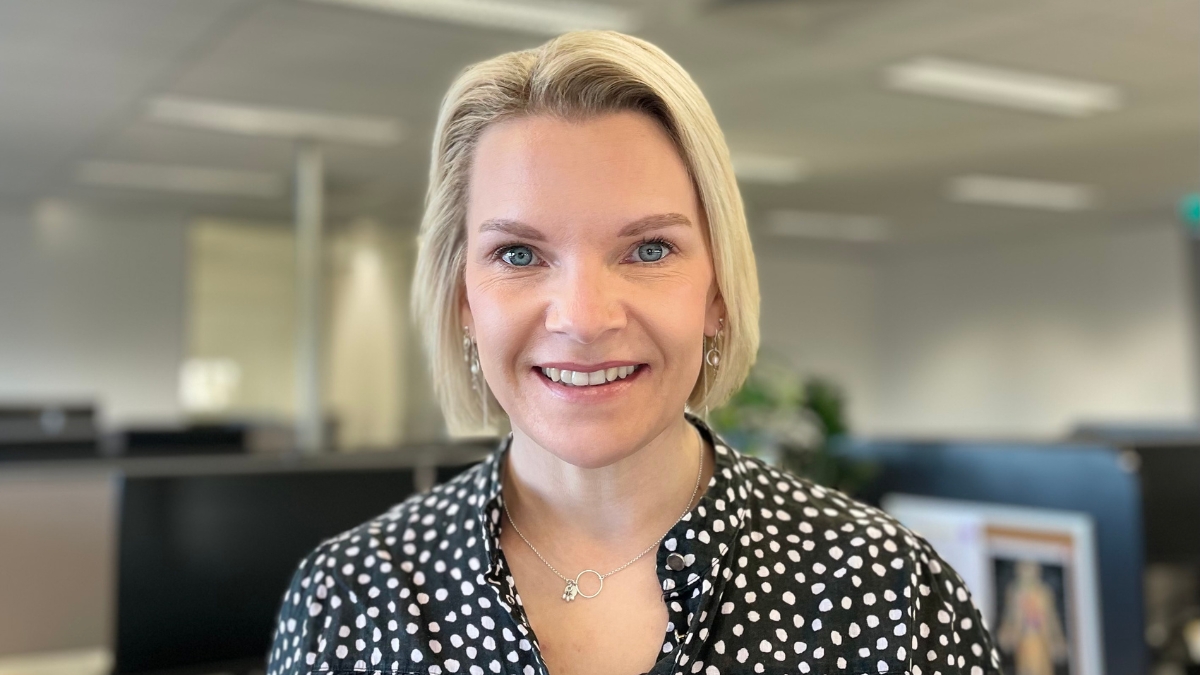
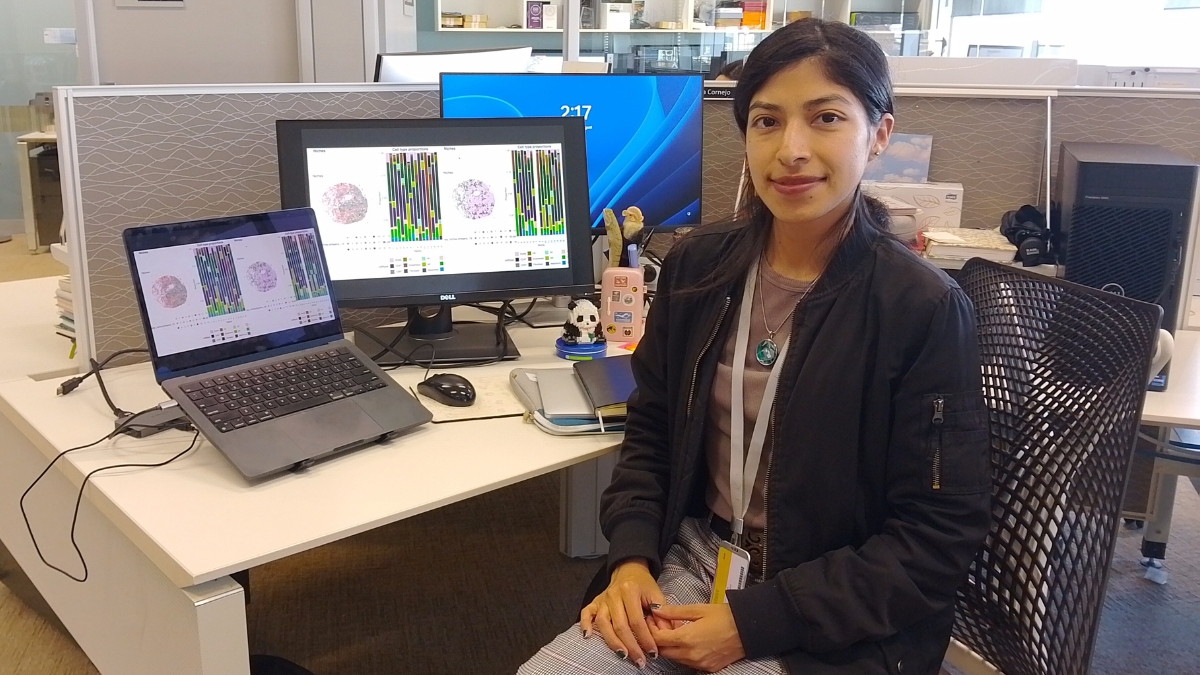
Carina Paola Cornejo Páramo, who has a PhD in Bioinformatics, works as a Computational Data Scientist in the Melanoma Institute Australia (MIA) Personalised Immunotherapy Platform (PIP) team, based at Charles Perkins Centre at The University of Sydney. In this Research Life, we learn about her exciting work on the PIP team, Carina’s ambitious career goals and more.
Tell us about your latest work.
Immune checkpoint inhibitors (ICIs) (immunotherapy drugs) have revolutionized the treatment of melanoma, significantly improving overall survival in patients with advanced disease. Anti-PD-1 (programmed cell death-1) monotherapy and the combination of anti-PD-1 and anti-CTLA-4 (cytotoxic T-lymphocyte antigen-4) are the current standard of care for patients with metastatic melanoma. However, approximately 50% of patients either fail to respond or eventually develop resistance to ICIs, resulting in disease progression. Understanding the cellular and molecular features of immunotherapy resistance is crucial to providing effective therapeutic options for patients with advanced melanoma.
As part of the PIP team, I am working on understanding what happens in the tumour microenvironment when resistance to immunotherapy develops. For this, I am using spatial transcriptomics data, where the gene expression and spatial location are profiled for each cell in a sample. We have matched samples before treatment and after disease progression – these samples provide a unique opportunity to investigate how tumors evolve to escape immunotherapy. With this data, we can characterise the cell type composition in each sample and learn how the cell composition, cell spatial distribution, and gene expression change between time points. We can also analyse cell-to-cell interactions to identify which signalling pathways are active and what specific signals are being used by cells to communicate. This is important because we could find interactions that help tumours resist immunotherapy – if we find these interactions we can find a way to target them with drugs.
How did you get into the melanoma research field?
After completing my PhD, I was looking to learn something new and apply my skills in a translational setting. I have a background in bioinformatics, machine learning, and the biology of gene regulation and was fortunate enough to find a position in the PIP team where I can apply my skills to understand the molecular mechanisms driving melanoma and treatment response.
What has been the highlight of your career so far?
The highlight of my career so far is my PhD thesis, a comprehensive body of work on gene regulation marked as outstanding by my reviewers.
What is your favourite part of your work?
I like exploring biological datasets and coming up with different ways to visualise and interpret them. Being part of MIA allows me to use my computational skills to analyse complex datasets and deliver insights that can ultimately help improve patient care and outcomes. I also enjoy being part of a group of researchers with diverse expertise working towards a common goal.
Do you have any future career goals?
My goal is to establish myself as an expert in Computational Biology and contribute to meaningful scientific discoveries that advance our understanding of life and disease. I want to always be doing something that I find interesting and intellectually stimulating.
Describe yourself in one word.
Curious.
Do you have a nickname?
My family calls me “Cari” – short for “Carina”.
What is your favourite movie?
I like ‘GATTACA’, a 1997 movie directed by Andrew Niccol. The movie is set in a futuristic dystopic society where a person’s opportunities and status are determined by their DNA. I think the core message is that determination and purpose can transcend genetic design.
What is a book you’ve enjoyed recently?
Recently, I read ‘The War of Art’ written by Steven Pressfield. Pressfield describes “Resistance” as an invisible force that keeps us from doing our best work. This book was a reminder that success and creativity are not only about inspiration but also about showing up consistently and pushing through self-doubt.