

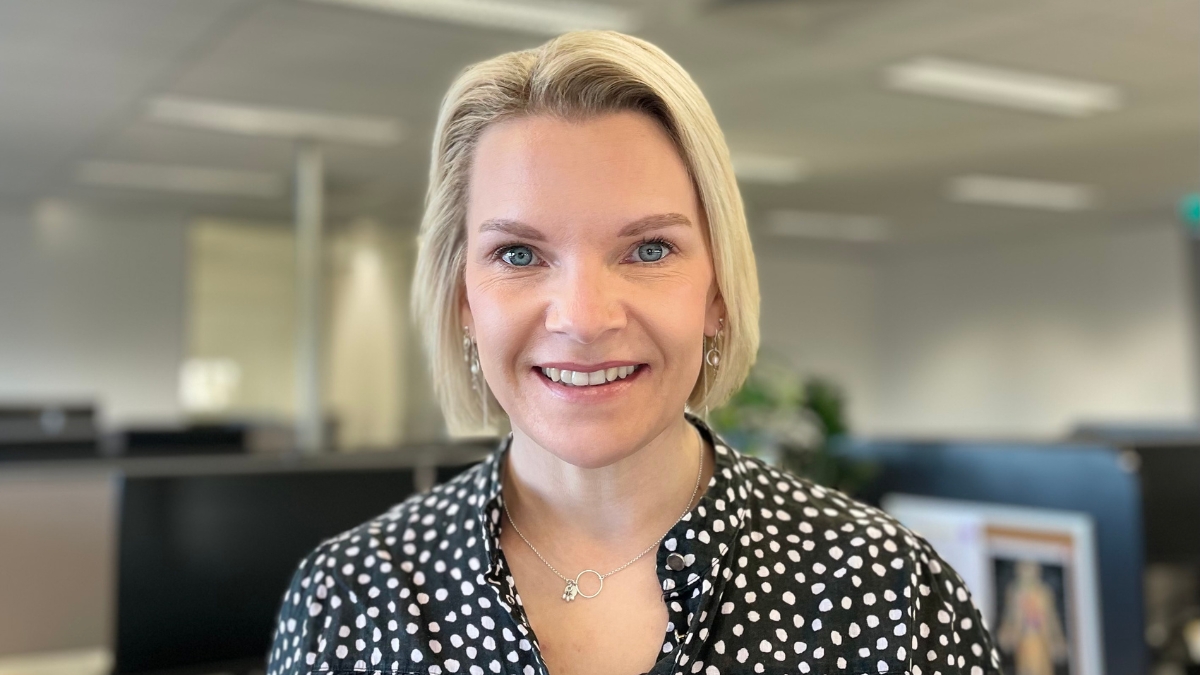
Nurudeen Adegoke is a Senior Data Scientist and Biostatistician at Melanoma Institute Australia (MIA). He is also an Honorary Senior Lecturer at University of Sydney and an Accredited Statistician with the Statistical Society of Australia. Learn about his latest work analysing immunotherapy resistance plus read his responses to our Q&A below.
Tell us about your latest work.
Almost half of melanoma patients treated with immunotherapy eventually develop resistance, meaning their cancer returns or progresses despite an initial response to treatment. Resistance remains one of the greatest barriers to long-term survival; however, the biological mechanisms that drive it are still poorly understood. Evidence suggests that tumours adapt through changes in the tumour’s microenvironment, including loss of immune cell activity, rewiring of signalling pathways, and emergence of resistant tumour subclones (fragments of DNA).
To address this challenge, my research focuses on uncovering and characterising the mechanisms that drive resistance to immunotherapy. Using advanced computational analysis and multi-omics biological data, I profile tumours that relapse after treatment to identify the cellular and molecular alterations which impact resistance. By directly mapping resistant cell states within the tissue, we can capture how tumour and immune cells interact during treatment failure. Ultimately, these insights will enable earlier detection of resistance, inform personalised treatment strategies, and accelerate the development of new therapeutic approaches.
Importantly, resistance is not only defined at the molecular level but also by the clinical progression of the disease through metastasis. To capture this, I am extending my research to study the timing and patterns of metastatic progression following the first immunotherapy using multi-state modelling. By linking biological mechanisms with the clinical course of the disease, this study will provide a dynamic framework of resistance that connects what happens inside the tumour to how and when melanoma spreads in patients. Ultimately, this integrated approach seeks to improve the prediction, treatment planning, and monitoring of melanoma patients.
How did you get into the melanoma research field?
I have a background in Mathematical Sciences, and I completed my PhD in Statistics at Massey University in New Zealand, followed by a postdoctoral fellowship. When my wife wanted to begin her PhD studies at UNSW, I moved to Sydney to support her, which gave me the opportunity to take the next step in my career.
During this time, I found an opportunity at MIA, where I saw the chance to apply my skills in statistics and modelling to challenges with direct clinical impact. The complexity of immunotherapy resistance and the availability of rich clinical and multi-omics datasets immediately attracted my attention. What began as a career shift has grown into a deep commitment to understanding melanoma progression and resistance and building predictive tools that can help improve patient outcomes.
What has been the highlight of your career so far?
One of the major highlights of my career has been the development of predictive models of immunotherapy response that integrate tumour mutation burden, tumour microenvironment, and gene expression features with patient clinical characteristics to identify those unlikely to benefit from standard treatments. (Cancer Res 2023;83(7_Suppl):5701). This work has now been incorporated into the ongoing Personalised Immunotherapy Platform (PIP-PREDICT) study at MIA, where these models are being tested in real-world clinical settings, a rewarding step in translating research into patient impact.
Another defining highlight has been the co-development of NeoRisk, an internationally validated tool that predicts recurrence after neoadjuvant immunotherapy). I also developed multi-omics recurrence models for Stage III melanoma patients receiving adjuvant anti-PD-1 therapy, which were presented at ASCO 2025.
Together, these projects showcase the power of combining multi-omics data to improve recurrence risk stratification and guide rational treatment selection in patients with melanoma. The adoption of these models and their movement closer to clinical application has been one of the most rewarding achievements of my career at MIA.
What is your favourite part of your work?
My favourite part of my work is the ability to apply computational and statistical methods to address complex questions in melanoma biology and treatment. I enjoy transforming large, multidimensional datasets into meaningful insights that can directly influence patient care.
Equally rewarding is working in a truly multidisciplinary environment at MIA, collaborating with clinicians, pathologists, biologists, and fellow data scientists, among others. Every discussion brings a new perspective, and it is inspiring to know that our combined efforts are driving discoveries that can improve patient outcomes.
Describe yourself in one word.
Resilient.
Do you have a hidden talent?
Plumbing: My father is a plumber, and I acquired this skill early on.
What is your favourite quote?
‘Feed the hungry, visit the sick, and set free the captives,’ – Narrated by Abu Muisa Al-Ash’ari.
What is your favourite movie?
‘The Pursuit of Happyness’ – An inspiring story of resilience and determination.
What is a book you’ve enjoyed recently?
‘Reclaim Your Heart’ by Yasmin Mogahed. A powerful reminder of resilience and inner strength.
Barrakallahu fhi
Having followed Dr. Nurudeen Adegoke for a long time, I must express my deep admiration for his outstanding body of research and unwavering commitment to excellence. His resilience, consistency, and proactive approach in seeking solutions to human challenges are truly inspiring.
Dr. Nurudeen exemplifies what it means to be a scholar devoted to impact and innovation. His dedication and intellectual depth have continued to expand my own understanding and appreciation of meaningful academic work.
On this remarkable occasion, I celebrate you, your team, and your family for this well-deserved milestone. May this achievement open doors to even greater heights the sky is only your beginning.
Once again, congratulations, Dr. Nurudeen Adegoke.