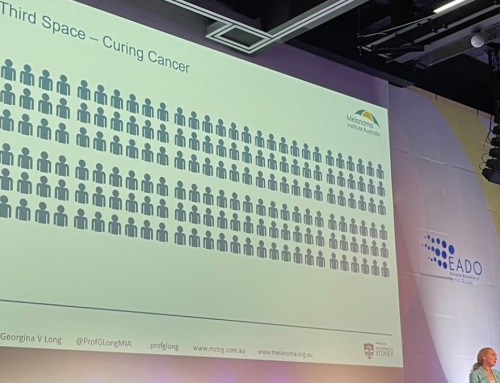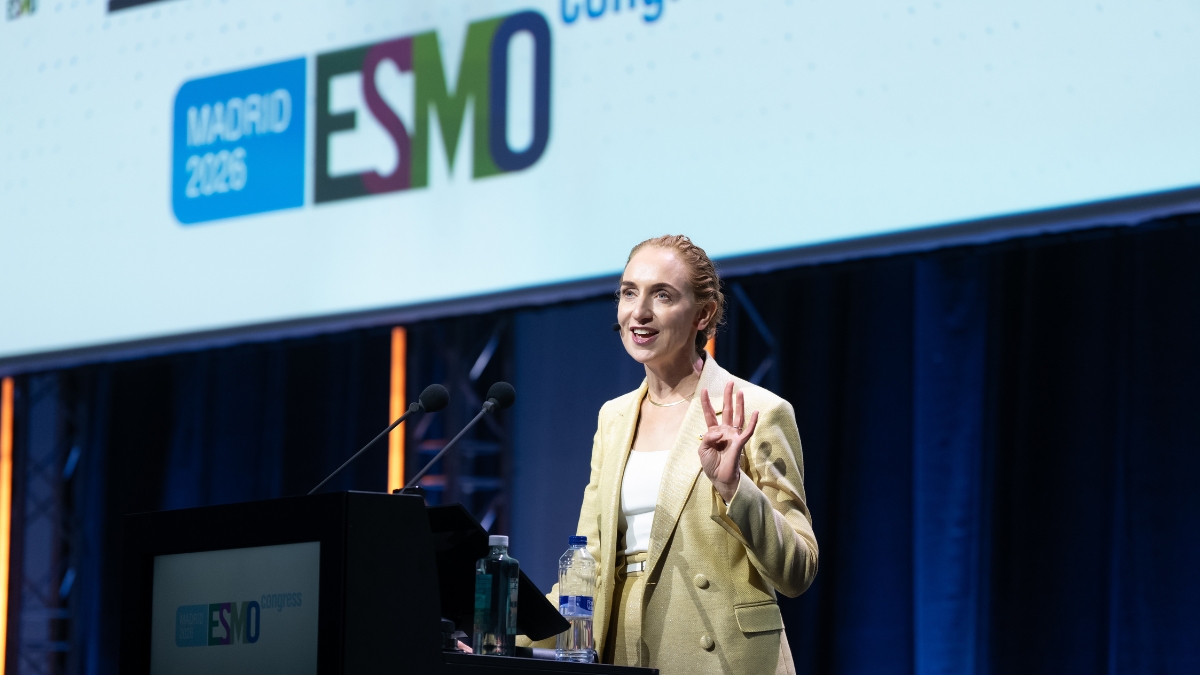
We’re pleased to share Professor Georgina Long’s presentation of the INTerpath-001 results at ESMO, one of the world’s leading cancer conferences. It explains in clear terms what the trial tested, what it found, and what it means for people with melanoma.
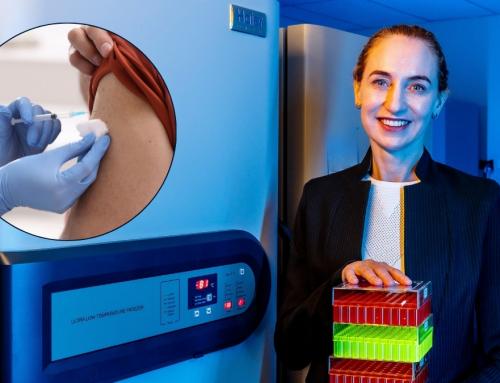
INTerpath-001 is a randomised phase 3 trial of individualised neoantigen therapy (INT), a personalised therapeutic cancer vaccine, intismeran autogene, given with pembrolizumab, compared with pembrolizumab alone. Pembrolizumab alone is a current standard of care across the world for this patient group.
The trial enrolled people with high-risk, early-stage melanoma that had been completely removed by surgery (stage IIB to IIID, and a small group with resected stage IV with no evidence of disease). Each INT is made for one person, designed from the genetic changes in their own tumour not spread with their normal cells or anybody else’s tumour. The aim is to train the immune system to find and eliminate remaining cancer cells and prevent the melanoma from returning.
Professor Georgina Long AO, Medical Director of Melanoma Institute Australia (MIA) and Chair of the INTerpath-001 Steering Committee, presented the primary results at ESMO26 in Madrid. The presentation is hosted here so that clinicians, researchers, patients and the community can hear the data and their interpretation directly from the investigators: what the trial shows and what it means for the treatment of melanoma.
Our focus is our patients, and curing those we have not yet cured. The therapies developed over the last 15 years now cure about half of people with stage IV melanoma, and they prevent progression to stage IV in many people with stage II and III disease, though not yet everyone. MIA’s multidisciplinary team meeting of expert clinicians is internationally recognised for its discussion of the most challenging cases of melanoma and complex skin cancer, and the evidence generated through this work informs clinical practice guidelines around the world. MIA is at the forefront of therapies that change cancer.