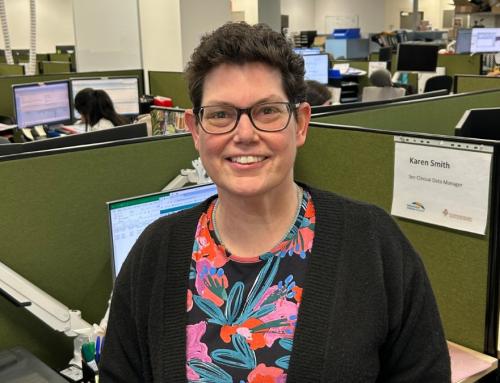
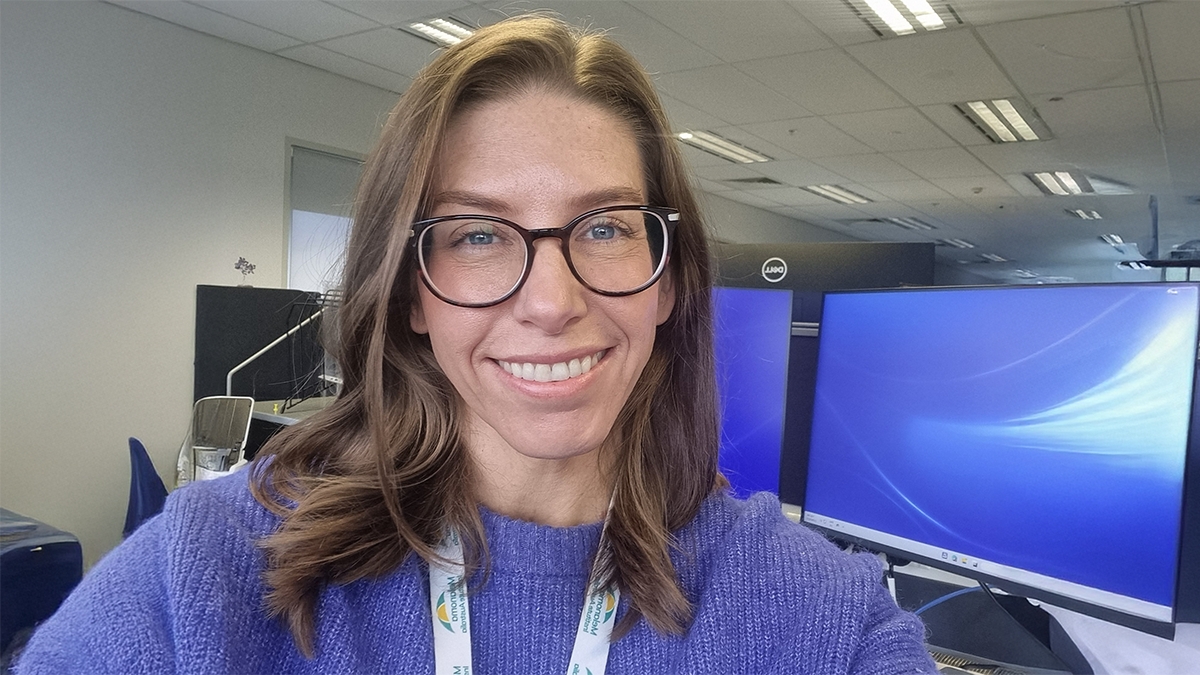
Kim Dowling is a Senior Clinical Data Manager at Melanoma Institute Australia (MIA). Read on to learn about Kim’s role, what she loves about her job, plus a few fun facts about her!
Tell us about your role.
My role at MIA involves data management for the Melanoma Research Database (MRD). All patients seen at MIA are invited to participate in MRD. For those patients that consent, I collect and interpret their clinical information, enter it into MRD and ensure quality control of these data. MRD is a critical component for publications and research activities undertaken at MIA, and it is through this research that MIA aims to achieve the goal of zero deaths from melanoma.
How did you get into the melanoma research field?
I started my career as a data manager in the field of medical genetics, and following this I worked as a research assistant in the radiation oncology field. This piqued my interest in cancer research. When the opportunity arose to work at MIA (then Sydney Melanoma Unit), as a clinical data manager for MRD, I jumped at the chance as I was intrigued to learn that it was the largest research database for melanoma in the world, with a rich history and significance.
What has been the highlight of your career so far?
In the early to mid-2010s, I was part of the working group for the expansion and development of MRD to accommodate data collection pertaining to the changing landscape of melanoma treatment. These changes included new discoveries of targeted therapies and immunotherapy (the first trial in anti-PD1 commenced in 2011), which offered more effective treatments for patients with advanced melanoma, and the collection of tumour samples via MIA’s Biospecimen Bank (with links to MRD) for a better understanding of tumour biology. The expansion also meant we could collect data related to patient participation in clinical trials and answer more pressing research questions. It was an exciting time, and I felt privileged to be involved in the refinement of the resource.
What is your favourite part of your work?
Sometimes I need to do some detective work to obtain all data relevant to the patient’s journey, and I enjoy the challenge of this. Also, knowing that I am contributing to research towards the goal of better patient outcomes is very rewarding.
Do you have a hidden talent?
I have always had an interest in the visual arts, and I like to paint and draw. More recently I’ve been dabbling in mosaics.
What is your favourite quote?
‘If you change the way you look at things, the things you look at change.’ – Wayne Dyer.
What is a book you’ve enjoyed recently?
‘Man’s Search for Meaning’ – Viktor Frankl.