The Melanoma Institute Australia team continues to play a leading role in advancing the frontiers of melanoma research, presenting new findings at two major international oncology conferences – the AACR Annual Meeting in San Diego, and the EADO Congress in Prague.
AACR 2026
This year the American Association for Cancer Research (AACR) held their Annual Meeting in San Diego. The mission of AACR is to prevent and cure cancer through research, education, communication and collaboration. Over 23,000 people attended in person and online.
Prof Georgina Long AO delivered a thought-provoking presentation on tackling the ‘Third Space’ – patients resistant to current immunotherapies – and how we can accelerate the discovery of effective treatments and identify these patients earlier.
“It was a fabulous AACR meeting, densely packed with science and research that will help us tackle the third space in cancer – those people who are still dying. So pleased to prevent work on how we are tackling the third space at MIA.” – Prof Georgina Long
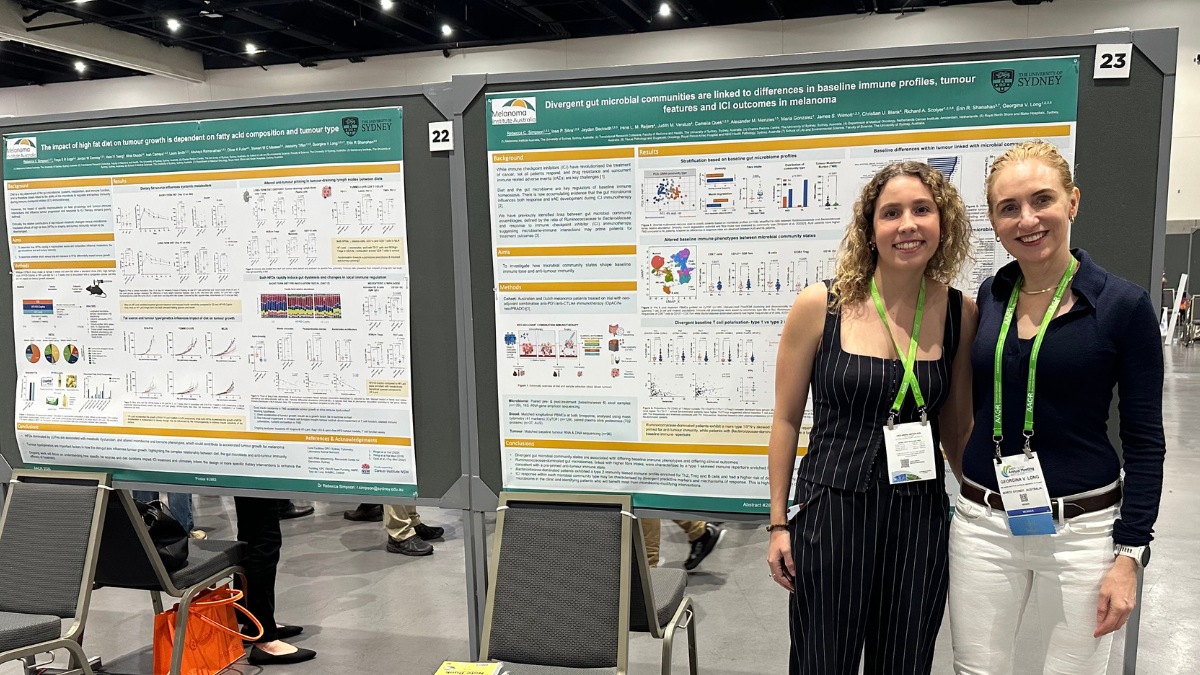
Dr Rebecca Simpson & Prof Georgina Long at AACR 2026
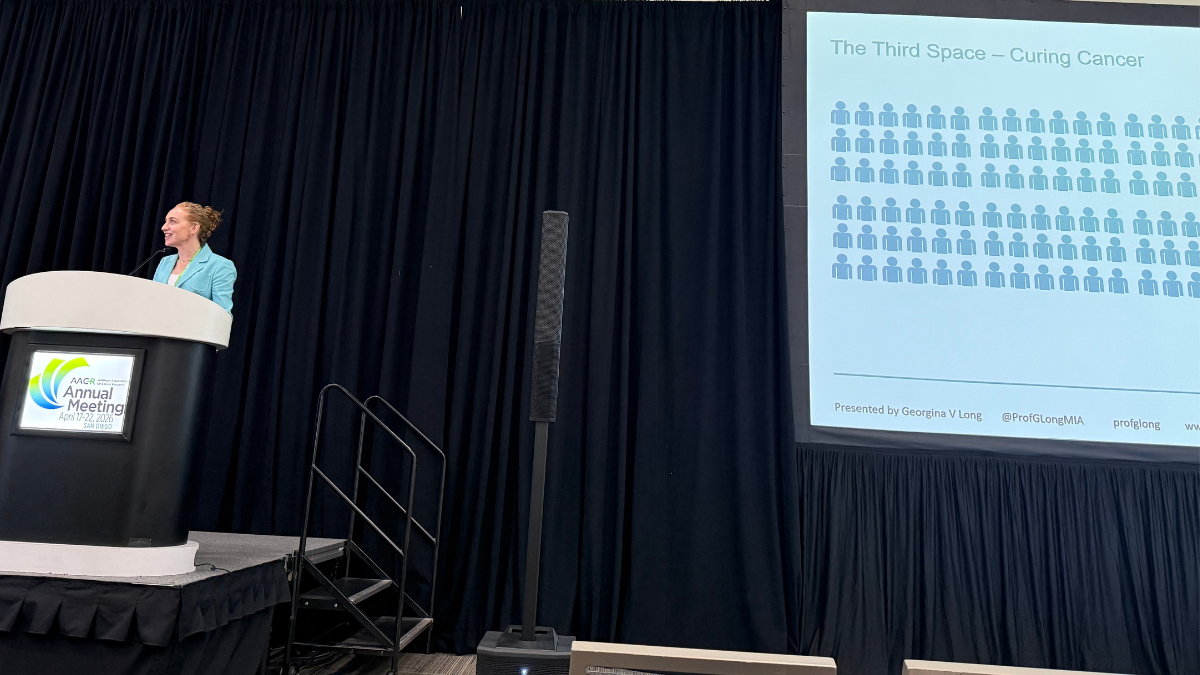
Prof Georgina Long presenting at AACR 2026
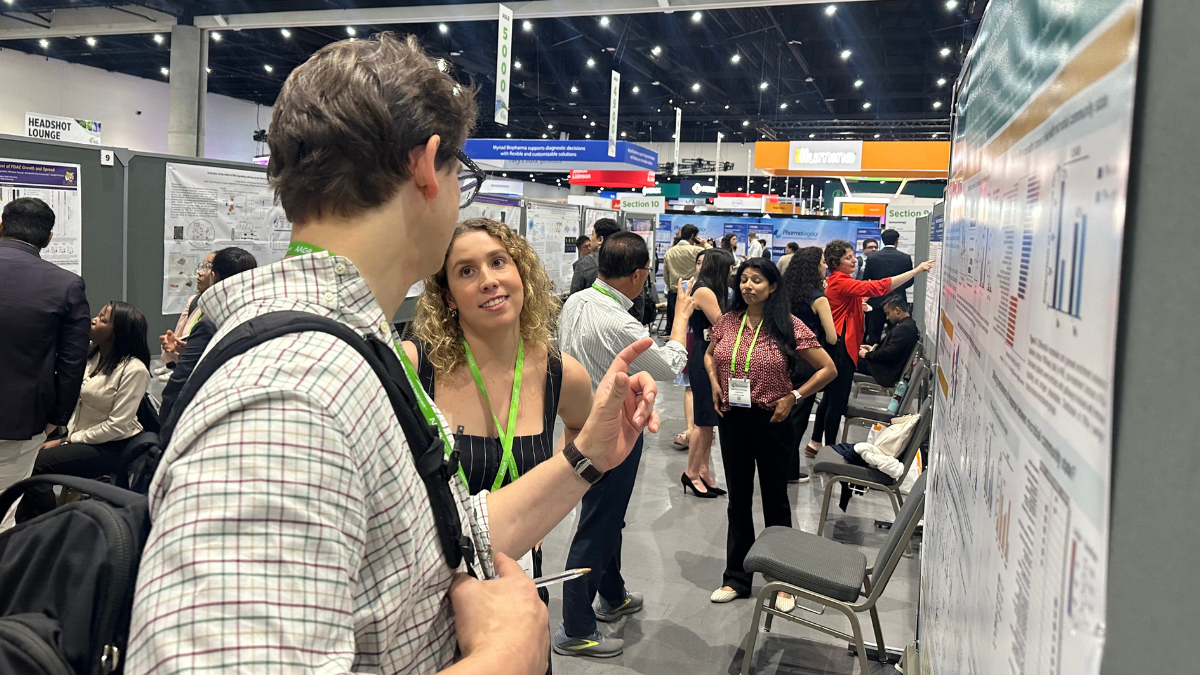
Dr Rebecca Simpson at AACR 2026
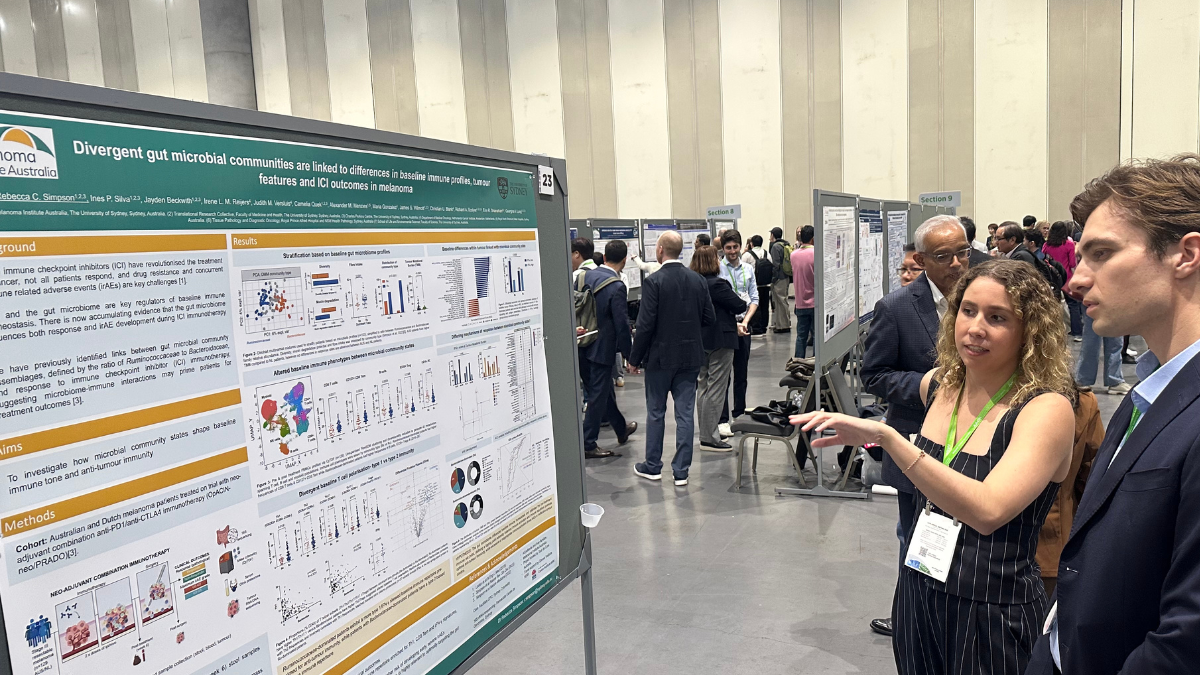
Dr Rebecca Simpson presents poster at AACR 2026
EADO 2026
The MIA team world delivered important research results changing melanoma and cancer at the EADO, the world’s largest conference in dermato-oncology (skin cancers). The 22nd European Association of Dermato-Oncology (EADO) Congress was held in Prague, Czech Republic.
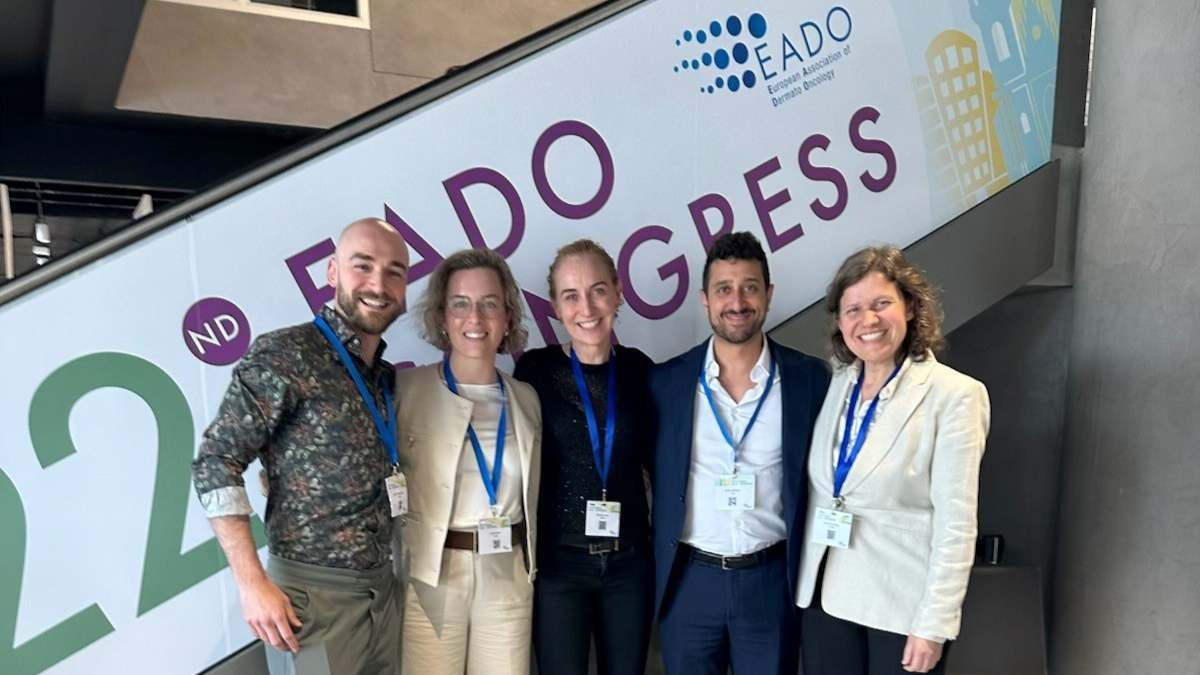
Dr Francis Proulx-Rocray, Dr Julia Ressler, Prof Georgina Long, Dr Andrea Boutros and Assoc Prof Ines Pires da Silva at EADO 2026
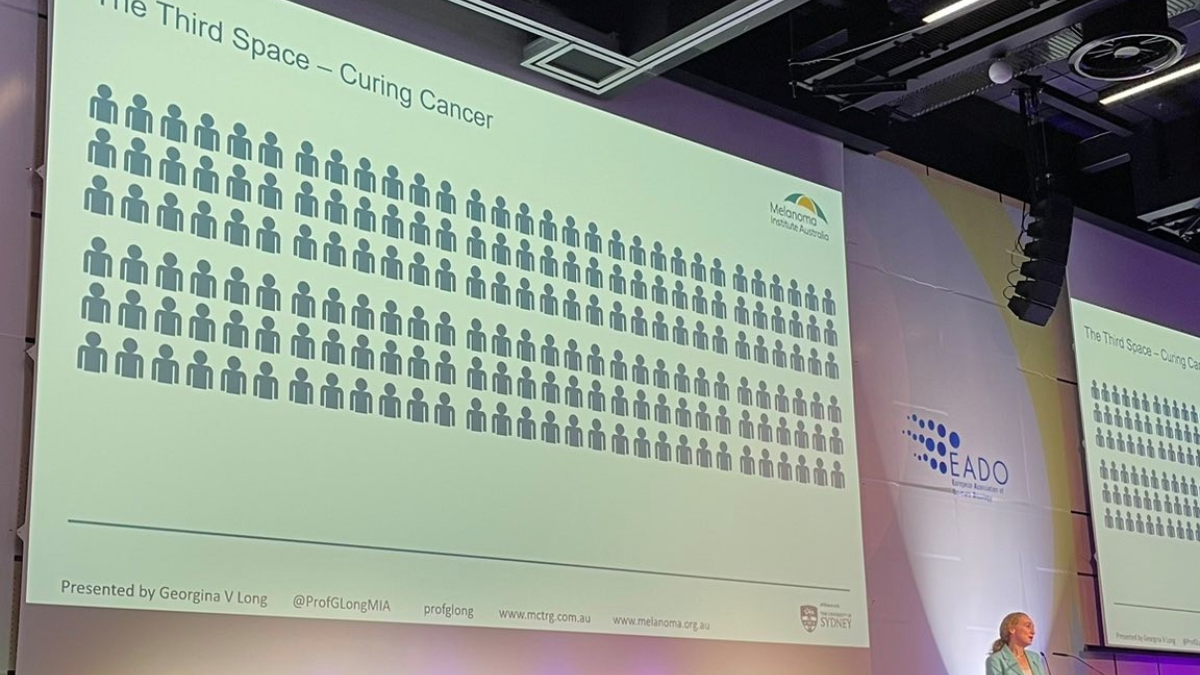
Prof Georgina Long presents at EADO 2026
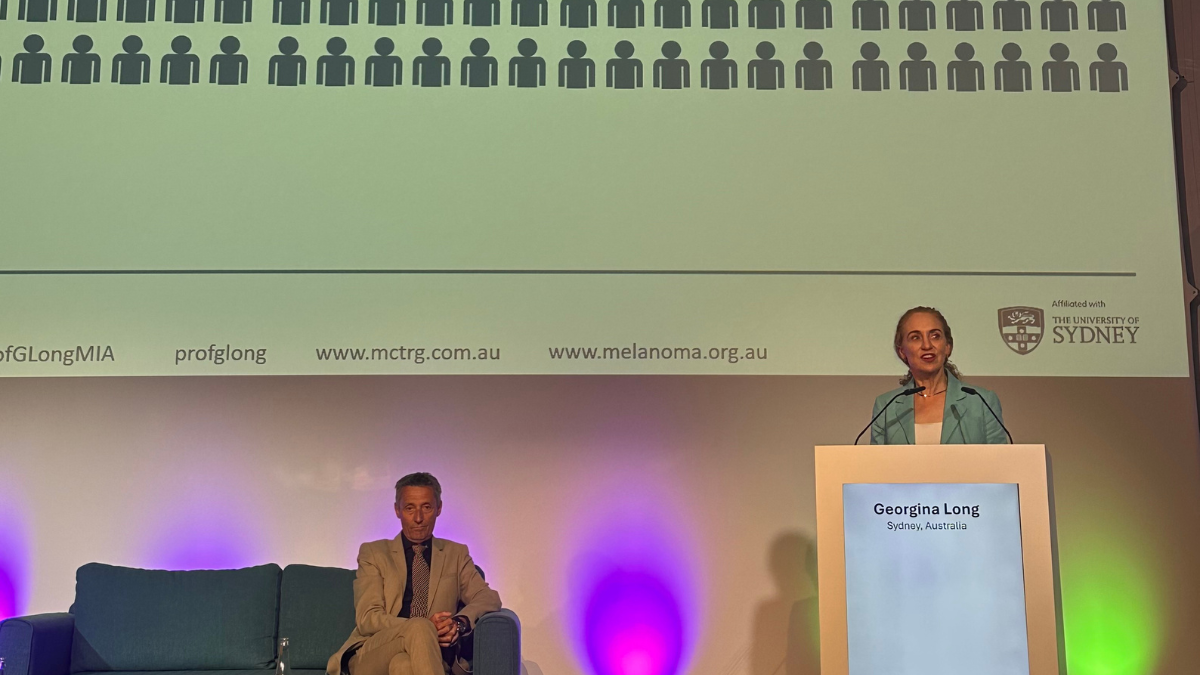
Prof Georgina Long EADO 2026
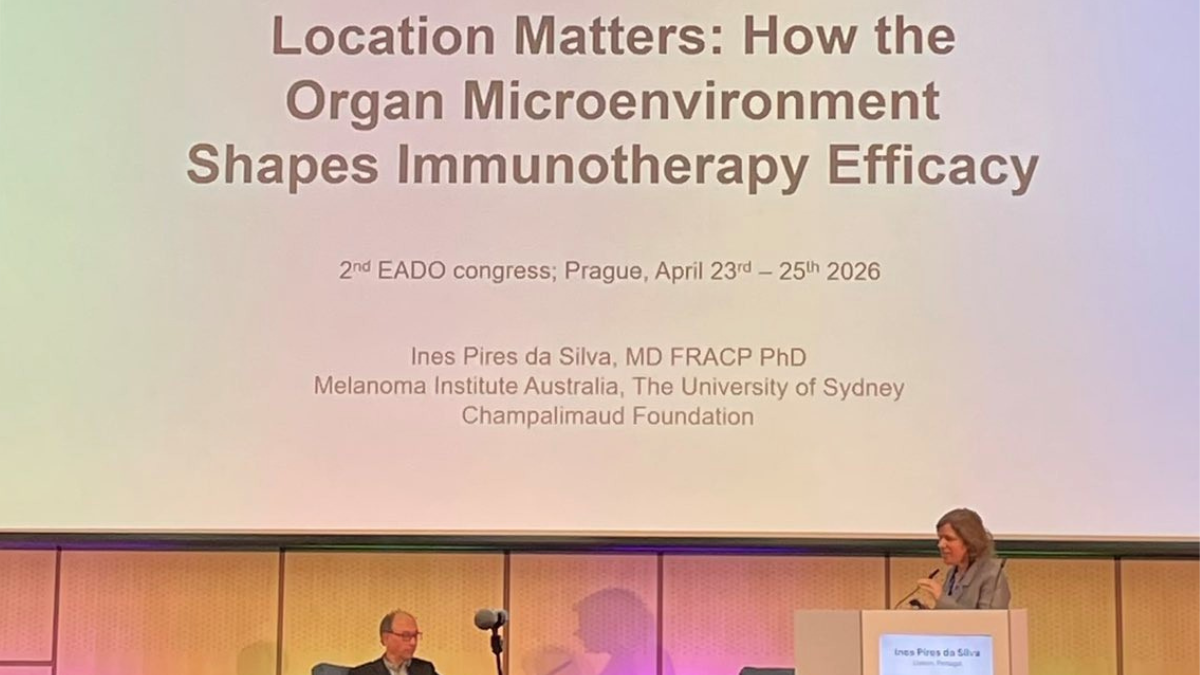
Assoc Prof Ines Pires da Silva presents at EADO 2026
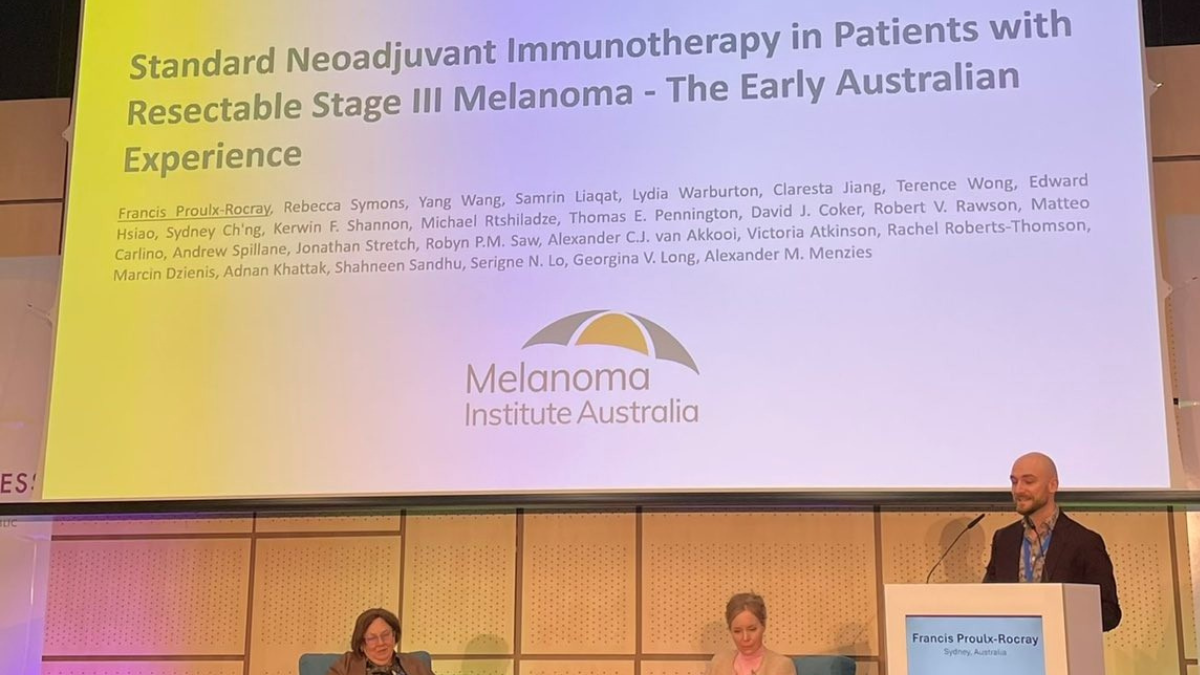
Dr Francis Proulx-Rocray presents at EADO 2026
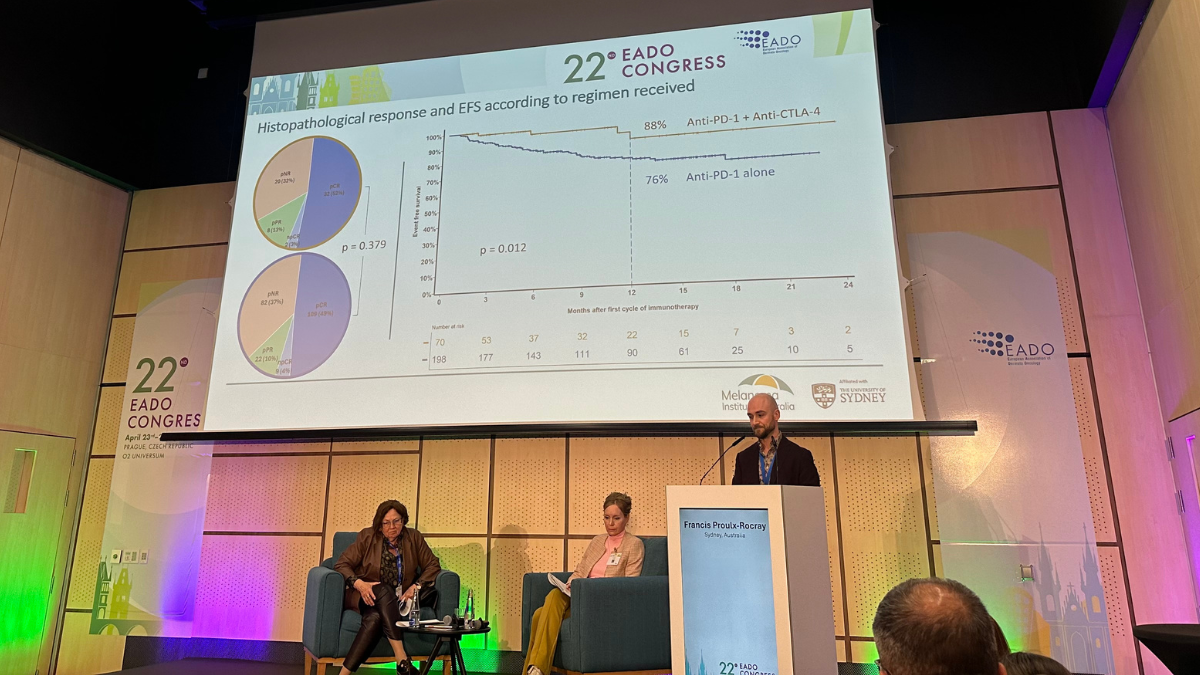
Dr Francis Proulx-Rocray EADO 2026
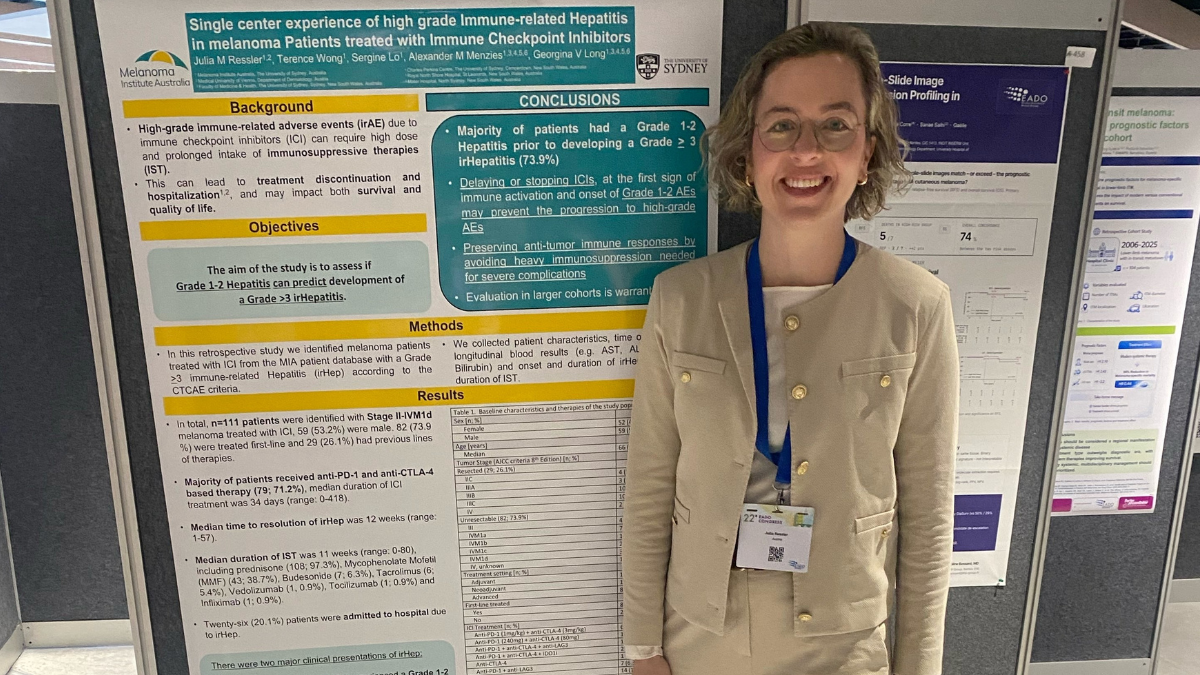
Dr Julia Ressler presents poster at EADO 2026
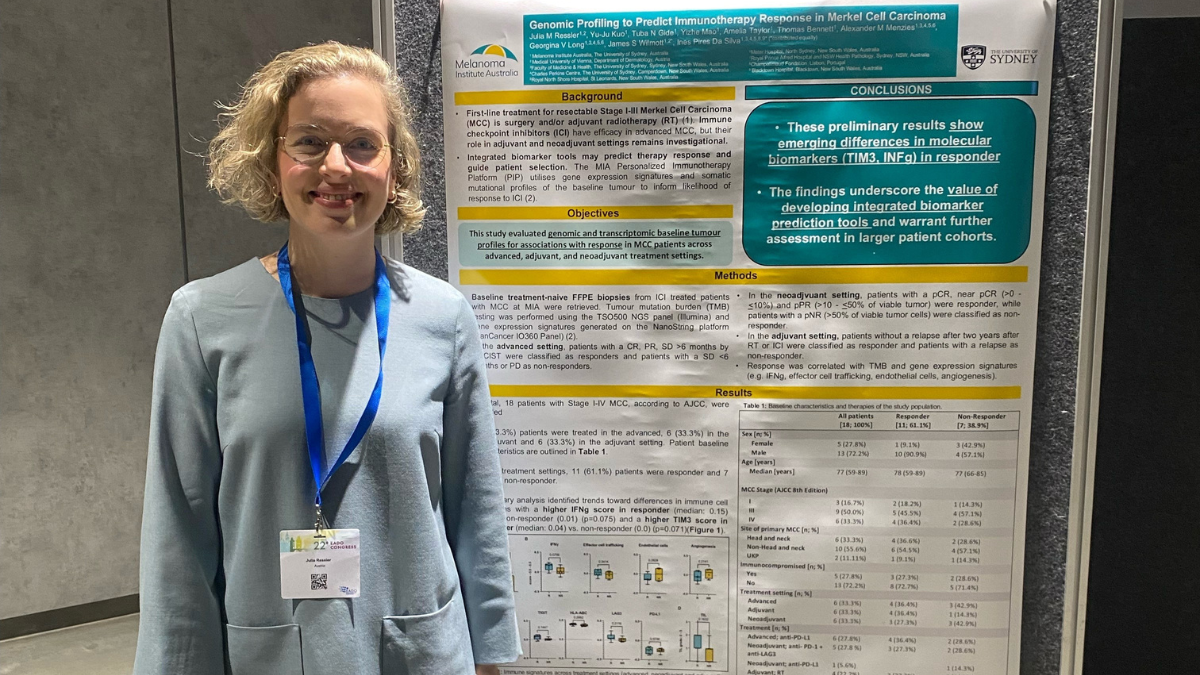
Dr Julia Ressler at EADO 2026
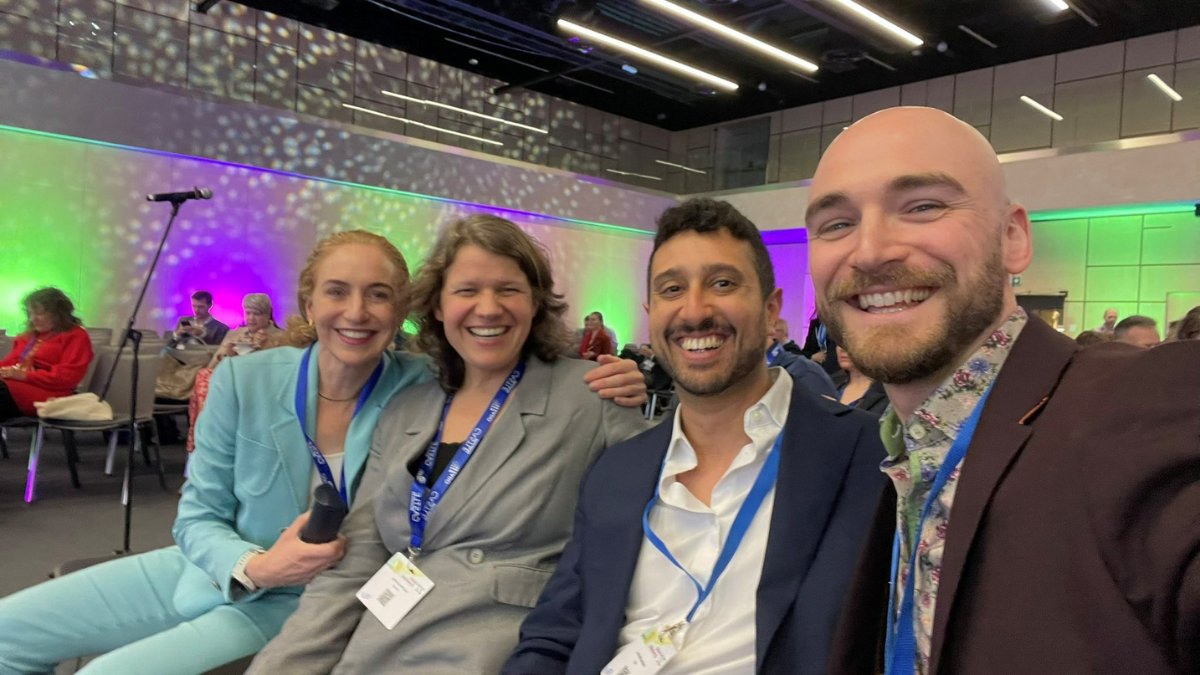
Prof Georgina Long, Assoc Prof Ines Pires da Silva, Dr Andrea Boutros and Dr Francis Proulx-Rocray at EADO 2026
These are the first of several large international conferences this year at which Melanoma Institute Australia’s leading researchers and clinicians will update global colleagues on research advances and subsequent changes to clinical practice.