Melanoma Institute Australia clinicians and researchers are in Chicago for the 2025 ASCO (American Society of Clinical Oncology) Annual Meeting, sharing latest research and clinical trial results with international colleagues.
ASCO brings together over 45,000 oncology professionals and features more than 200 dynamic sessions detailing cutting-edge scientific research and discoveries.
MIA’s delegation is led by Medical Director Professor Georgina Long AO who will deliver a prestigious oral presentation on results of an adjuvant immunotherapy clinical trial. MIA surgeon Associate Professor Alexander van Akkooi will present early results from a trial involving high risk Stage II melanoma patients, and MIA Medical Oncologists Associate Professors Ines da Silva and Alex Menzies will also both be presenting at the conference.
Other MIA researchers and clinicians, including our 2024 Fellows, will deliver poster presentations detailing recent scientific advances and findings in relation to melanoma and other complex skin cancers.
‘Sharing insights, clinical trial results and scientific data is critical to push the global oncology field forward as we collectively strive to save lives from not only melanoma and other complex skin cancer, but all cancers,’ said Prof Georgina Long AO.
‘ASCO represents a meeting of the best minds in oncology, and we are proud that Melanoma Institute Australia continues to play a leading role in shaping cancer treatment and patient care.’

Prof Georgina Long

Assoc Prof Alex van Akkooi

Assoc Prof Alex Menzies

Assoc Prof Matt Carlino

Prof Georgina Long, colleagues from The Netherlands Prof Alexander Eggermont and Prof John Haanen, Assoc Prof Ines Pires da Silva

Prof Georgina Long and Prof Jun Guo, leading melanoma oncologist in China
PROF LONG PRESENTS ORAL AT ASCO
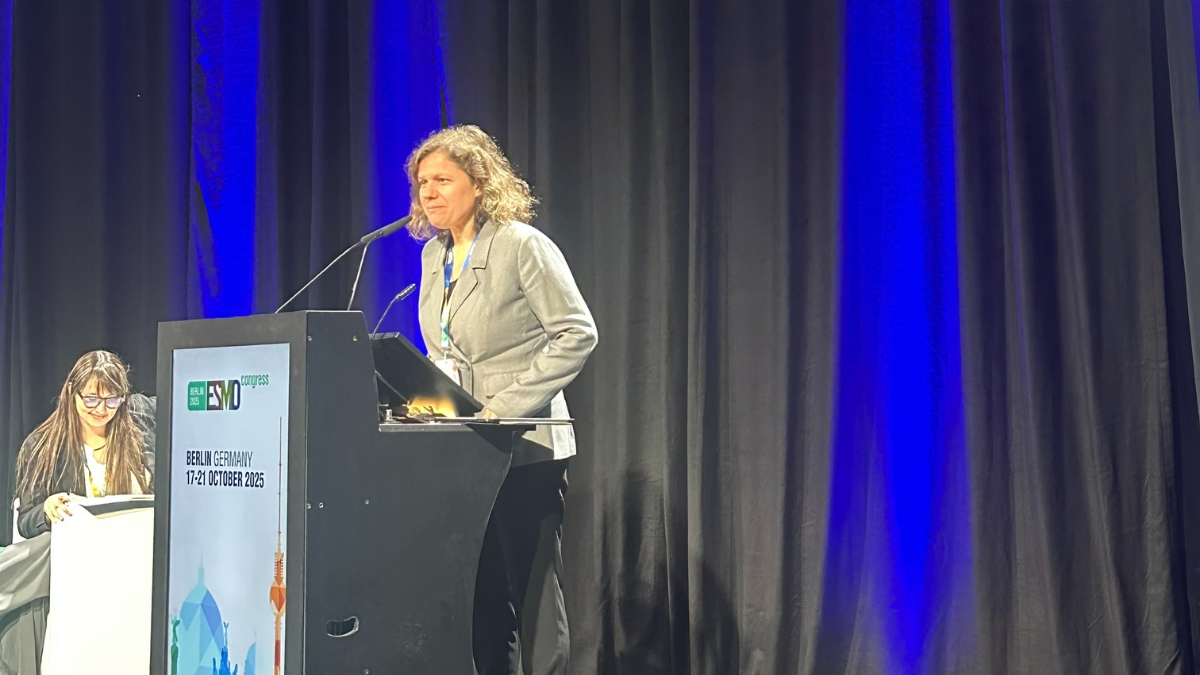
Melanoma Institute Australia Medical Director Professor Georgina Long AO has taken centre stage at the American Society of Clinical Oncology (ASCO) Annual Meeting in Chicago to deliver a prestigious oral on a post-surgery (adjuvant) immunotherapy clinical trial for patients with resected high risk and advanced melanoma.
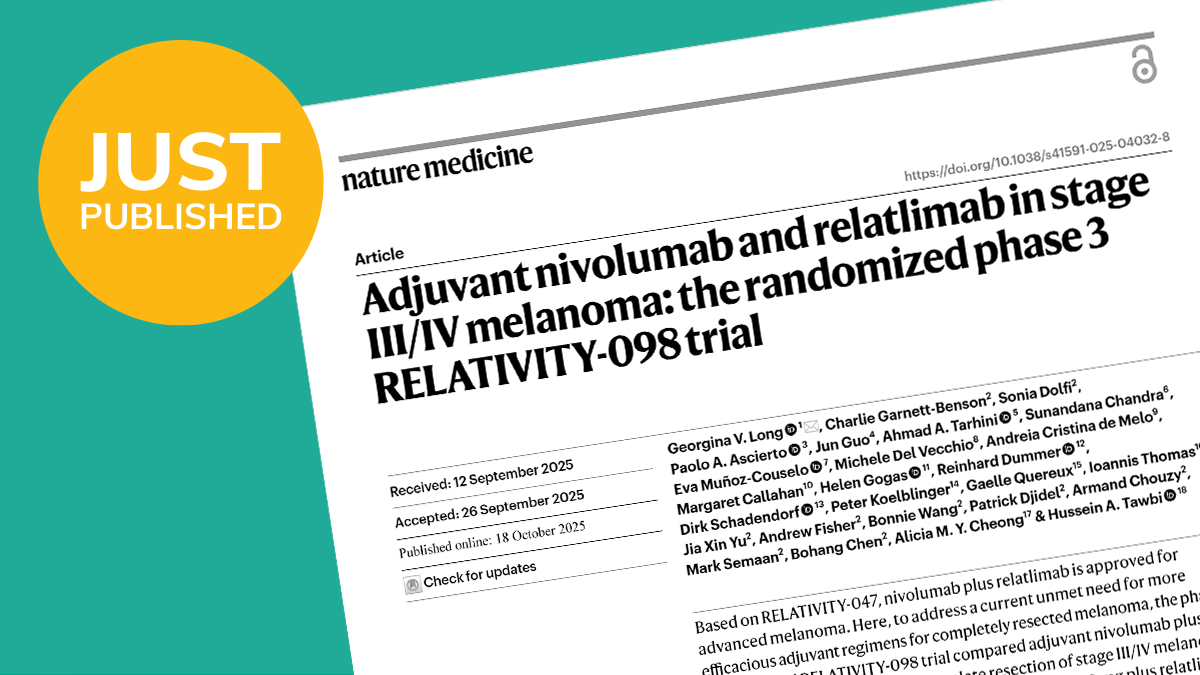
The RELATIVITY-098 trial assessed the combination of nivolumab and relatlimab vs nivolumab alone in Stage III and Stage IV patients whose disease had been surgically resected. The results were negative, meaning that whilst this combination immunotherapy works when given in advanced melanoma (as shown in the RELATIVITY 047 trial), it does not work when given post-surgery as so-called ‘mop up’ therapy to prevent disease recurrence.
‘Whilst this is what we call a negative study, as the combination treatment showed no benefit to these patients, it is hugely important in building our understanding of how and why immunotherapy works for patients with advanced melanoma,’ Prof Georgina Long said.
Adjuvant treatment with single-agent immunotherapy is a current standard of care for resected Stage III and IV melanoma. However, 50% of these patients relapse within 5 years so there is a need to improve post-surgery therapy options.
RELATIVITY-098 evaluated whether combination immunotherapy, which is the approved standard of care in the neoadjuvant setting for advanced melanoma patients, would have benefit for patients whose disease had been surgically removed.
The trial involved patients with resected Stage III and IV melanoma and no evidence of disease from 163 sites across 24 countries. Most patients had Stage III melanoma (~90%). It showed the combination immunotherapy did not significantly improve recurrence free survival, when compared to the standard of care of single-agent immunotherapy.
Prof Long shared early translational data providing valuable scientific insights and hypotheses as to why the combination immunotherapy did not work as ‘mop-up’ therapy post surgical resection.
‘Biomarker data shows that at baseline before immunotherapy, patients with advanced melanoma have a higher number of activating immune cells in the blood before surgery than are seen in patients post-surgery with earlier-stage disease,’ Prof Long said. ‘This supports the hypothesis that the smaller magnitude of specific subsets of immune cells available for immunotherapy treatments to work upon could impact the recurrence free survival benefit in the post-surgical setting.
‘This negative trial gives us valuable data on which we can build as we continue our research to improve survival rates for this group of patients with advanced melanoma. We will present more detailed biomarker data later this year.’

PROMISING RESULTS FOR STAGE IIB/C PRESENTED AT ASCO
Melanoma Institute Australia surgeon, Associate Professor Alex van Akkooi, has delivered an oral abstract at ASCO on early results from the COLUMBUS-AD trial. The trial, which was run through the European Organisation for Research and Treatment of Cancer (EORTC), was a randomised trial of adjuvant encorafenib and binimetinib versus placebo in patients with high risk Stage II melanoma with BRAF mutation.
Previous study has demonstrated the efficacy of BRAF and MEK inhibitors in patients with Stage IIIB/C melanoma with unresectable disease. This current COLUMBUS-AD trial looked at whether the treatment would have similar efficacy in patients with Stage II resected disease.
Associate Professor Alex van Akkooi told ASCO delegates the COLUMBUS-AD trial opened in June 2022 with the aim of recruiting 815 patients, however the trial was closed early due to poor recruitment. He said results from the first 110 patients were promising.
‘This was the first and only randomised adjuvant trial of BRAF directed therapy with encorafenib and binimetinib for Stage IIB/C BRAF mutant melanoma patients, with the treatment tolerated well with manageable side effects,’ he said.
‘Although the study was closed due to poor recruitment rates, the data generated highlights the potential of this post-surgery treatment to prevent cancer recurrence in this patient group.
‘Whilst the results were not strong enough to get approval from authorities around the world for this to become a standard treatment, they are encouraging and lay a strong foundation for further studies.’
POSTERS AT ASCO
The poster session relating to melanoma and skin cancer has opened at ASCO in Chicago, featuring 11 poster presentations involving Melanoma Institute Australia researchers.
Associate Professor Ines Pires da Silva led three projects being presented as posters at ASCO, one relating to predicting response to neoadjuvant immunotherapy in melanoma, and two relating to immunotherapy for Cutaneous Squamous Cell Carcinoma (cSCC).
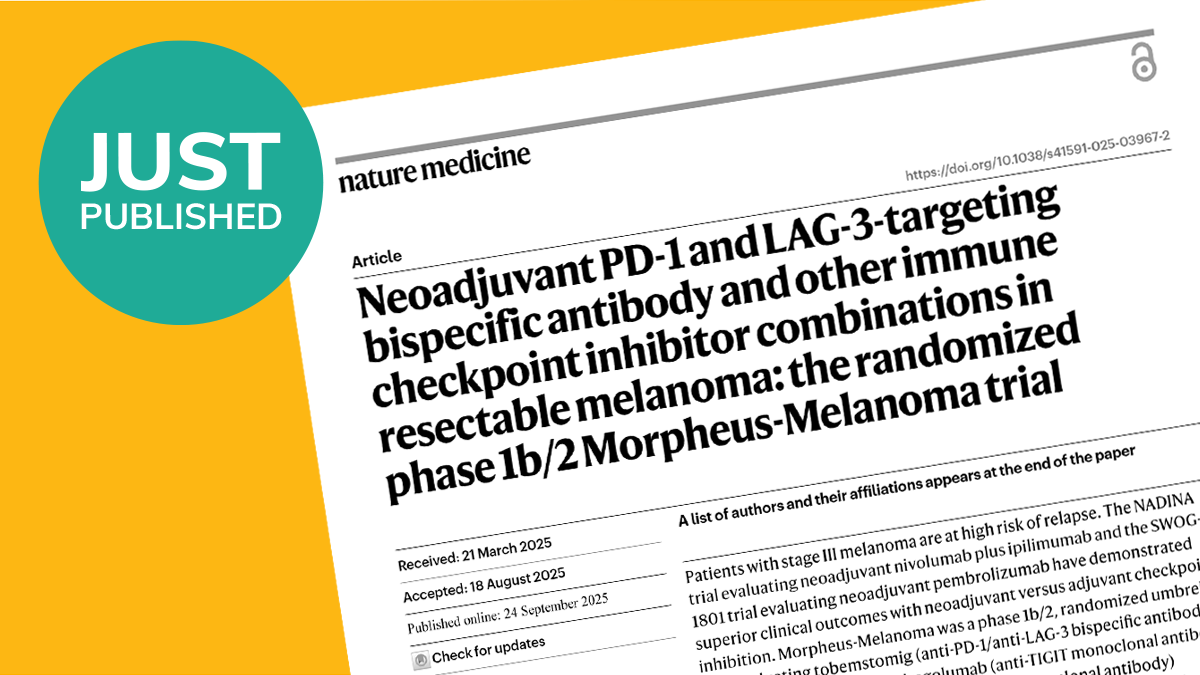
The neoadjuvant melanoma poster examines the effect of three different PD1-based neoadjuvant regimens on the immune profile of melanoma patients, and the correlation, if any, with patients’ pathological response to treatment. It details that combination immunotherapy induced stronger blood immune activation compared with single agent PD1 alone, irrespective of pathological response. A more indepth analysis of the effects of these PD1-based regimens and their association with recurrence is now underway.
MIA 2024 Medical Oncology Fellow Dr Yu-Ju Kuo will present the poster titled Multiomic Analysis of Cutaneous Squamous Cell Carcinoma (cSCC) and Association with Response to Anti-PD1 Therapy (PD1). Anti-PD1 induces a durable response in advanced cSCC however about 30% of patients are resistant to anti-PD1. The poster details difficulties in predicting which cSCC patients are likely to respond to this immunotherapy.
A/Prof da Silva will also present the poster of a pooled analysis of cSCC patients and clinical outcomes with anti-PD1-based neoadjuvant immunotherapy. The study involved 134 patients with resectable cSCC from 17 cancer centres globally, and found that neoadjuvant anti-PD1 was associated with high clinical response.
Also with a poster at ASCO relating to optimising neoadjuvant immunotherapy for cSCC is MIA’s Director of Clinical Care Ms Maria Gonzalez, whilst MIA biostatistician Dr Nurudeen Adegoke’s poster looks at developing accurate biomarker models to determine risk of recurrence in Stage III melanoma patients.
You can view all MIA’s ASCO posters by clicking on the button below.

Prof Georgina Long, Assoc Prof Ines Pires da Silva
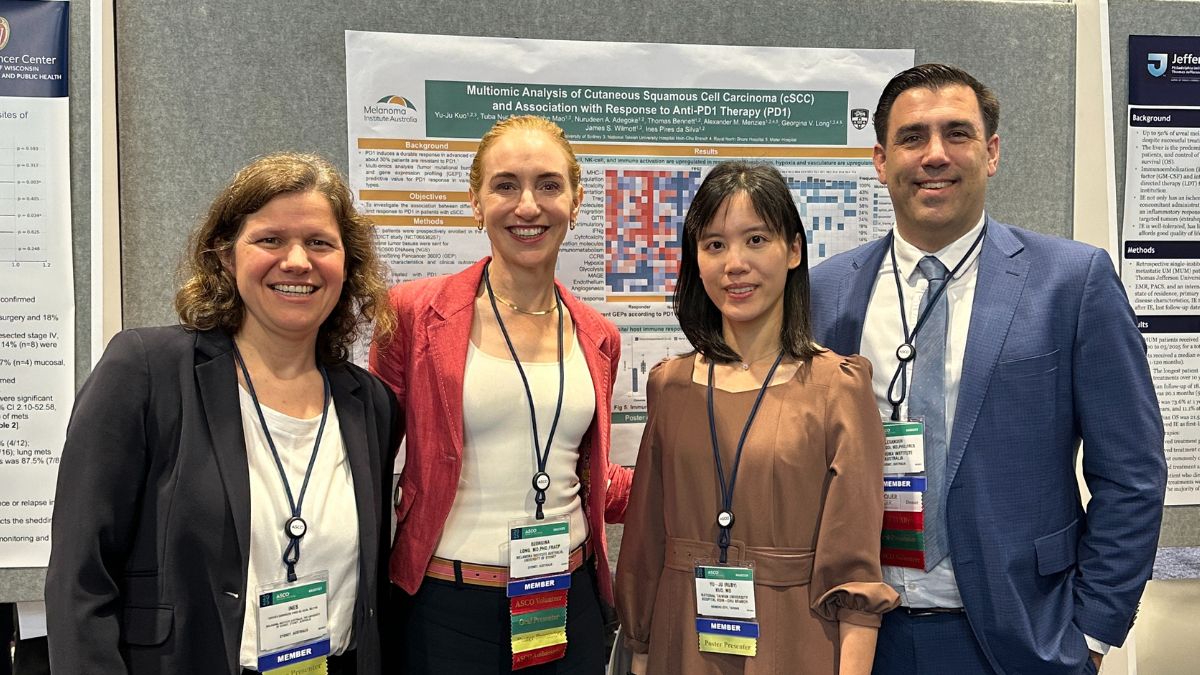
Assoc Prof Ines Pires da Silva, Prof Georgina Long, Dr Yu-Ju (Ruby) Kuo, Assoc Prof Alex van Akkooi