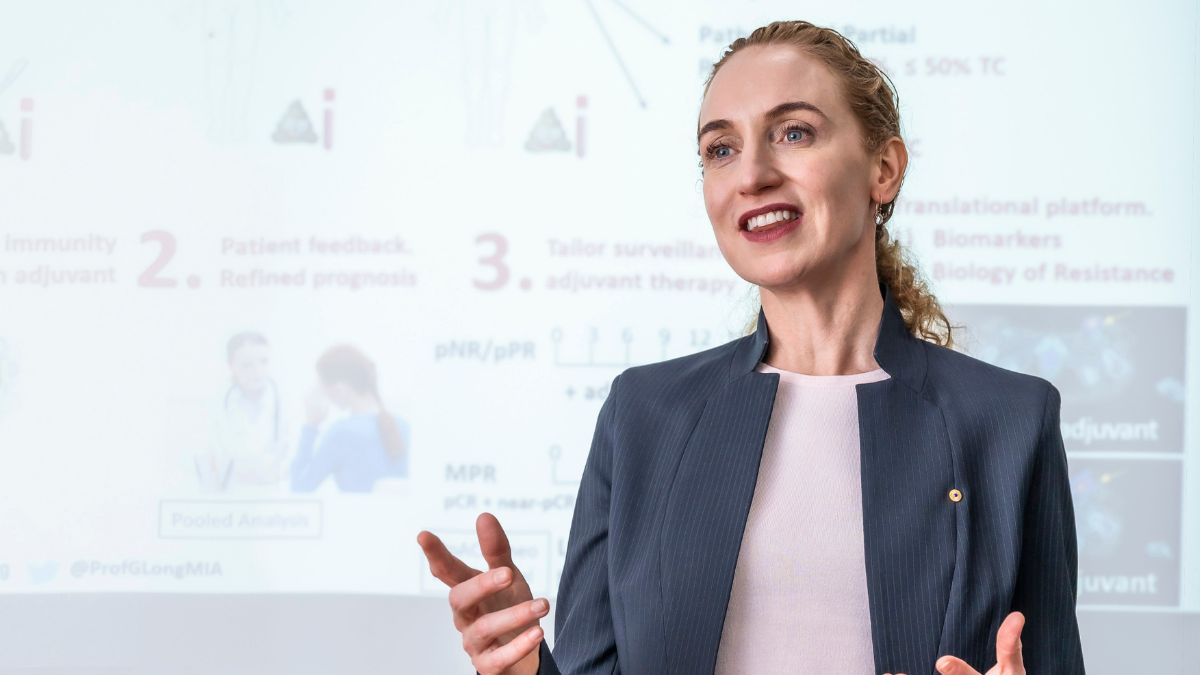
Melanoma Institute Australia Medical Director, Professor Georgina Long AO, is leading the next group of clinical trials in the use of pre-surgery immunotherapy as life-saving treatment for melanoma.
In August, Australia became the first country in the world to subsidise the pre-surgery use of combination immunotherapy for Stage III melanoma patients, following the success of the NADINA trial. The study was co-led by Professor Long and her colleague Professor Christian Blank from The Netherlands Cancer Institute, working with a multidisciplinary team of medical oncologists, surgeons, pathologists, and scientists.
Professor Long said although the NADINA clinical trial was practice-changing globally, thanks to the collaborative efforts of trial teams around the world, there was still much more to do.
‘The breakthrough NADINA trial laid the groundwork for this next series of neoadjuvant, or pre-surgery, immunotherapy clinical trials,’ Prof Long said.
‘Our focus is now on deep translational work to test different combinations of neoadjuvant immunotherapy to try to achieve even better response and progression-free survival rates,’
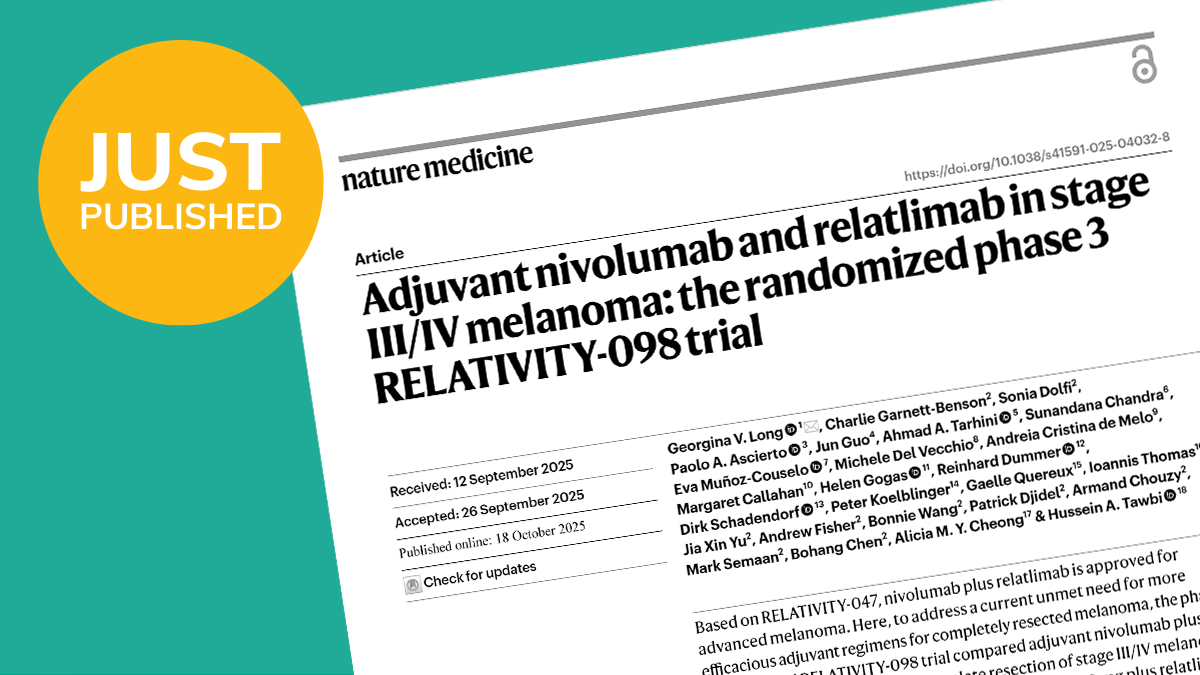
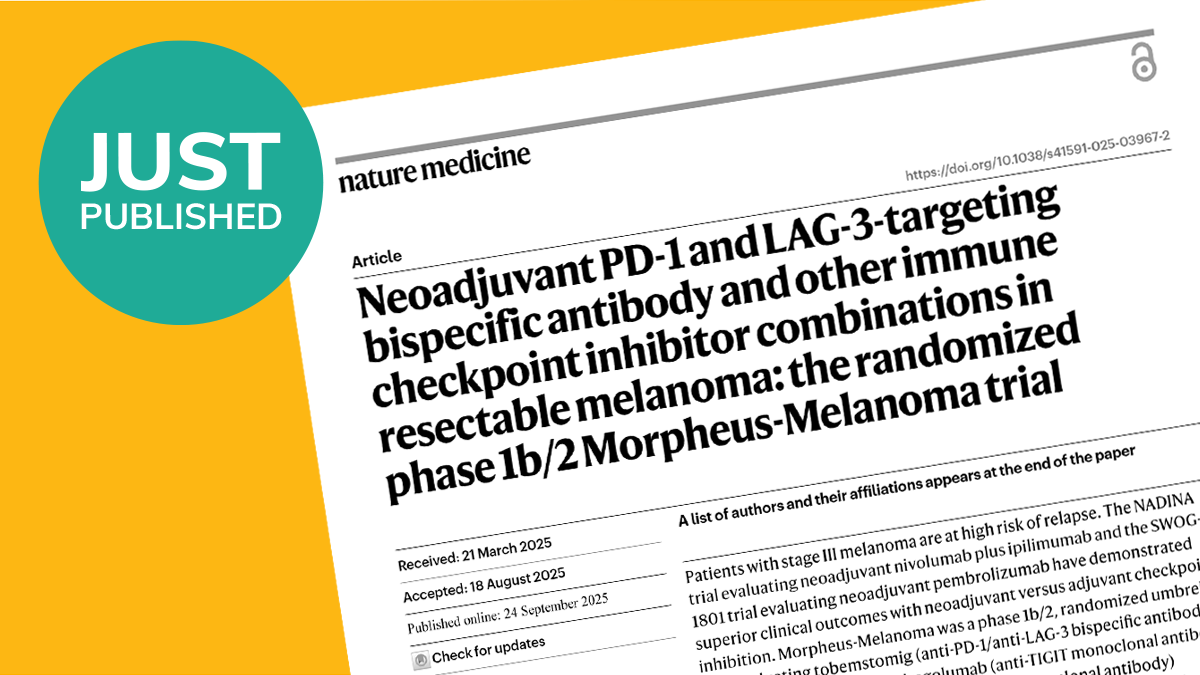
Results of one of these latest neoadjuvant immunotherapy clinical trials were today published in the prestigious Nature Medicine. Professor Long co-designed the Morpheus-Melanoma trial with the team at Roche, which was a global randomized umbrella study conducted at 14 centres across Australia, France, Italy, Spain and the United States.
It evaluated the use of different combinations of neoadjuvant immunotherapy drugs – tobemstomig (a single drug targeting both PD1 and LAG3 checkpoints); tobemstomig plus tiragolumab; and atezolizumab plus tiragolumab – against nivolumab plus ipilimumab in Stage III melanoma. The radiological and pathological response to the different immunotherapy combinations was determined and compared.
The Morpheus-Melanoma study concluded that neoadjuvant tobemstomig demonstrated a similar response and improved safety profile versus nivolumab plus ipilimumab in patients with resectable Stage III melanoma.
‘As a Medical Oncologist who develops drugs and understands their mechanisms of action and their toxicities, I am passionate about designing trials like this to deepen our understanding of immunotherapy drug combinations. My goal is to provide safer and more effective outcomes for patients,’ Prof Long said, who was first author on the Morpheus-Melanoma trial.
‘I am proud of the clinical trials and translational research being led by Melanoma Institute Australia which will continue until we ultimately can save all lives from melanoma.’