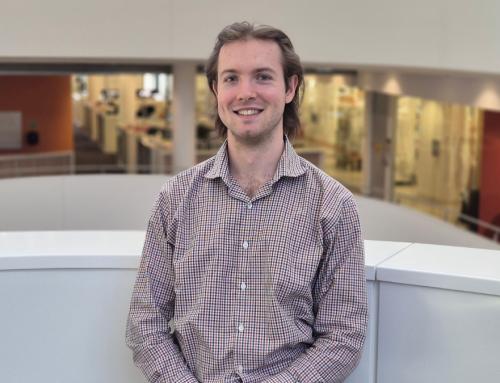
Shafayat Chowdhury is a Clinical Biospecimen Coordinator at Melanoma Institute Australia (MIA). Read on for Shafayat’s Q&A where he touches on career highlights, future goals, plus his seriously handy hidden talent.
Tell us about your role.
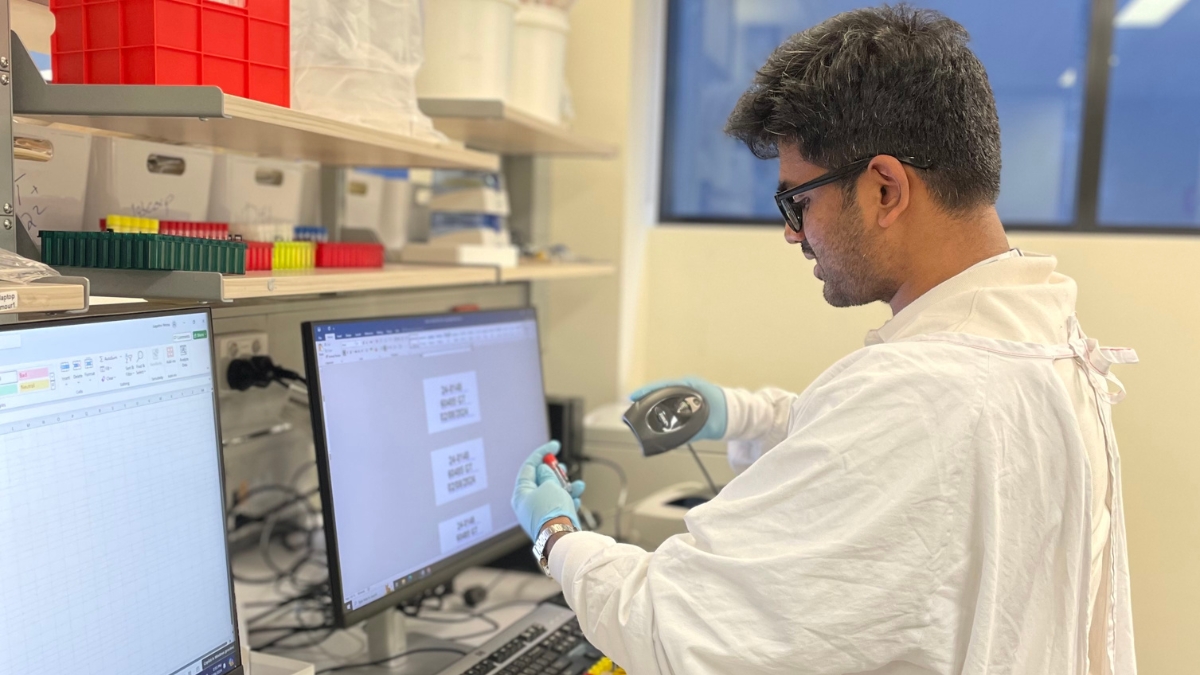
In my role as Clinical Biospecimen Coordinator at Melanoma Institute Australia (MIA), I work behind the scenes to ensure every blood and tissue sample is processed and stored to the highest standards. My focus is on strengthening quality control so our 20,000+ biospecimens remain reliable for world-leading melanoma research. For the melanoma community, this means peace of mind — every donation is carefully safeguarded to fuel discoveries that lead to better treatments and outcomes.
How did you get into the melanoma research field?
I’ve always had a strong interest in science and knew early on that I wanted to work in a field that connected research with real patient impact. When I came across biobanking, I was intrigued — it’s such a niche but critical part of research that many people don’t even realise it exists. I decided to give it a try and quickly saw how essential high-quality biospecimens are for driving discoveries. That led me to melanoma research and my current role at MIA.
What has been the highlight of your career so far?
A highlight of my career so far has been presenting my first scientific poster at the ISBER 2025 conference. I showcased our work on enhancing quality control in PBMC* analysis by integrating Levey-Jennings charts and Westgard rules into daily workflows. Sharing this project with an international community of biobank professionals was a proud moment — not only because it reflected the progress we’re making at MIA, but also because it showed how careful sample management can directly strengthen the research that leads to better outcomes for melanoma patients.
*PBMC are Peripheral Blood Mononuclear Cells, which are immune cells isolated from blood and characterized by their round nuclei. This group includes lymphocytes (T cells, B cells, and NK cells) and monocytes.
What is your favourite part of your work?
My favourite part of my work is the people I’m surrounded by every day. I’m fortunate to work alongside such driven, passionate, and genuinely lovely colleagues who are all committed to the same goal — improving outcomes for people with melanoma. Their dedication and teamwork make even the toughest days rewarding and inspires me to keep growing in this field.
Do you have any future career goals?
Looking ahead, my goal is to make better use of data to strengthen the impact of biobanking. By finding smarter ways to track, analyse, and share biospecimen information, I want to ensure every patient donation is used to its fullest potential. For me, the future of biobanking is about combining high-quality samples with high-quality data to drive discoveries that improve outcomes.
Do you have a nickname?
I’ve been called “the postman” a few times — because I always deliver!
Describe yourself in one word.
Curious.
Do you have a hidden talent?
A hidden talent of mine is that I can fall asleep within a minute — a skill that definitely comes in handy after busy days in the lab!
What is your favourite quote?
‘Win a no-win situation by rewriting the rules.’ – Harvey Specter from Suits.
What is your favourite movie?
My favourite movies are The Lord of the Rings trilogy — I’ve always loved the epic storytelling, the sense of teamwork, and the reminder that even the smallest contributions can make a big difference.
What is a book you’ve enjoyed recently?
A book I’ve enjoyed recently is My Autobiography by Sir Alex Ferguson. His story is full of lessons on leadership, discipline, and adapting to challenges, but what stood out most to me was his relentless commitment to excellence. It’s a powerful reminder that sustained success comes from hard work, clear standards, and never settling for less than your best — values I try to bring into my own work.